If you are a coach who has ever opened a blank Google Doc the night before a workshop and thought, “Okay but what are we actually doing for 90 minutes?” this is for you.
Running a powerful workshop is not about having better slides. It is not about talking more. It is not about filling time with icebreakers and hoping something meaningful happens.
It is about structure.
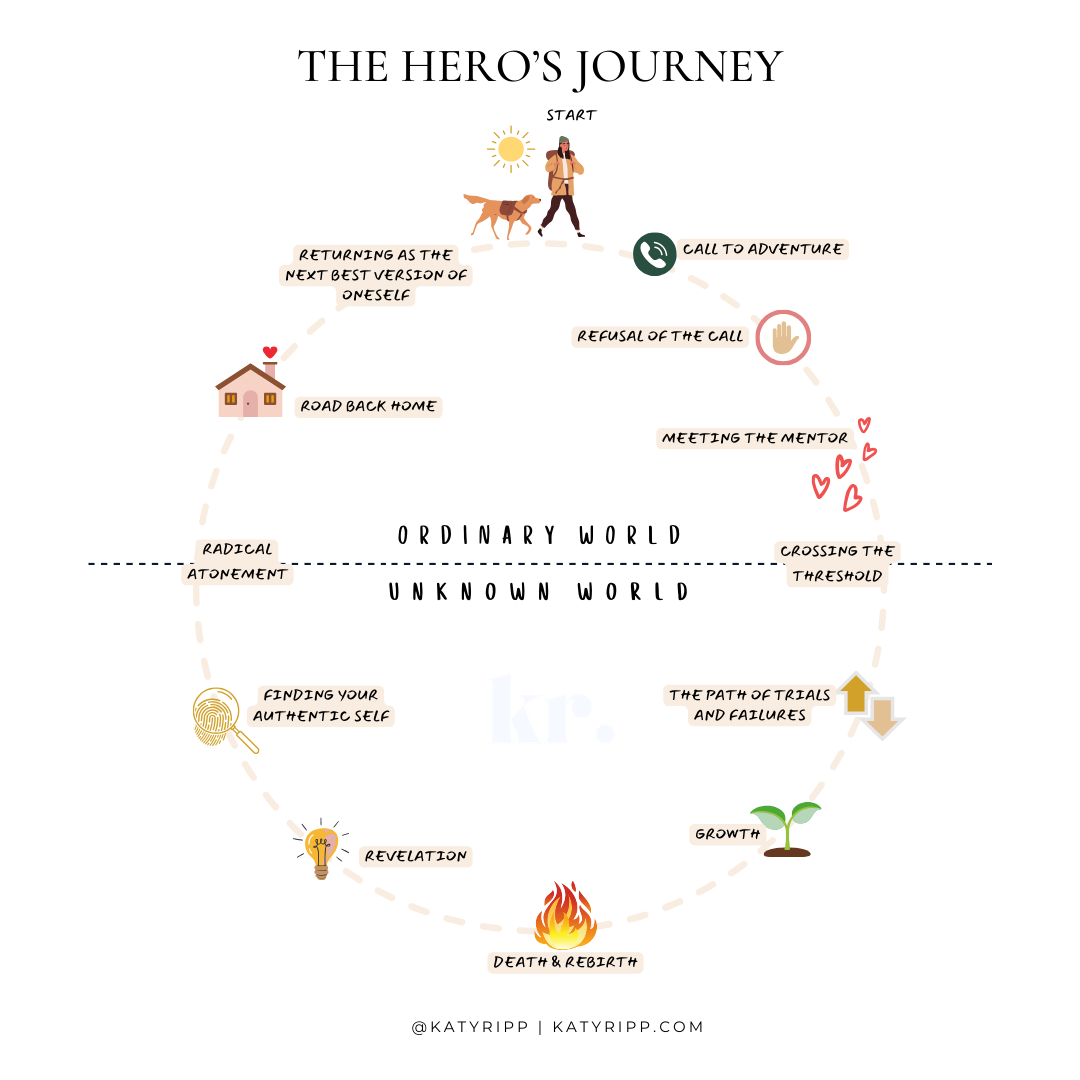
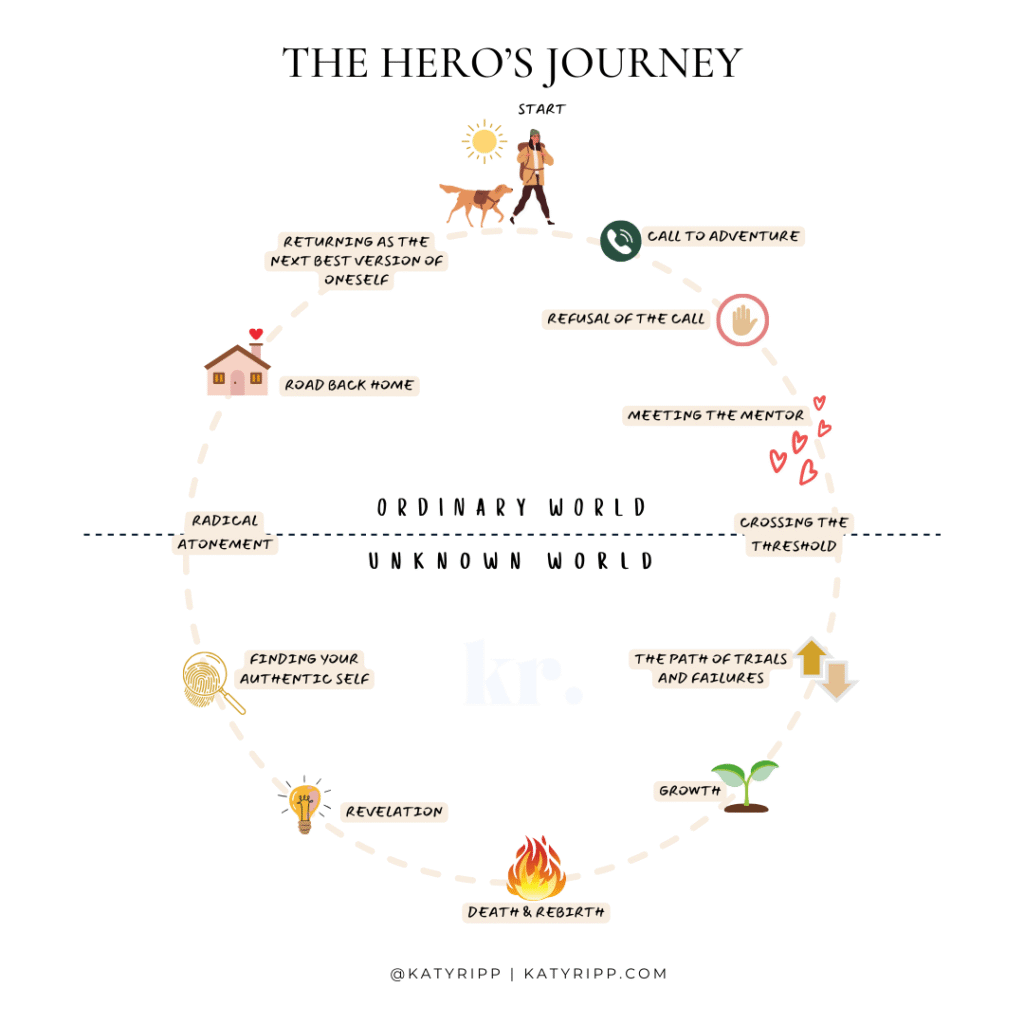
And one of the most powerful structures you can use in a coaching setting is the Hero’s Journey.
Not in a mythology lecture kind of way. In a psychological growth kind of way.
Let’s break it down.
What the Hero’s Journey Actually Is
The Hero’s Journey is a storytelling framework popularized by Joseph Campbell. It maps the stages a character moves through when they experience transformation.
But here is the important part for coaches.
It is not just a storytelling arc. It is a human growth arc.
Every meaningful change we go through follows a similar pattern:
- We start somewhere familiar.
- Something calls us forward.
- We resist.
- We step into the unknown.
- We struggle.
- We grow.
- We become someone new.
- We return changed.
That is not just a movie plot. That is personal development.
When you use this framework inside a workshop, you are giving your clients a map for their own transformation.
And people love maps.
Why This Framework Works So Well in Coaching
Most workshops fail because they are either too inspirational or too informational.
Inspiration feels good but fades quickly.
Information feels smart but rarely changes behavior.
The Hero’s Journey works because it is reflective.
It allows participants to locate themselves inside a growth cycle.
When someone can say, “Oh. I am in resistance right now,” instead of “I must be failing,” everything shifts.
The framework normalizes discomfort. It validates struggle. It reframes fear as part of progress.
And most importantly, it moves people toward action.
How to Structure a 90 Minute Hero’s Journey Workshop
You do not need to teach mythology for 30 minutes. In fact, please do not.
You need to briefly explain the arc and then guide reflection.
Here is a simple 90 minute structure.
1. Set the Frame
Start by clearly positioning the session.
Let participants know this is not a motivational talk. It is a structured self mapping experience designed to help them understand where they are in their own growth process.
Briefly explain that growth is not linear, that discomfort does not mean failure, and that resistance is not weakness. These are normal and necessary parts of change.
Then introduce the Hero’s Journey as a framework we can use to locate ourselves within a larger cycle of evolution and transformation.
Keep this section concise. Five to ten minutes is more than enough to set the tone and move into reflection.
2. Ordinary World
Invite participants to reflect on where they are right now in their lives or work.
Ask them where things feel steady or predictable, where they feel stagnant or under challenged, and what feels fine on the surface but quietly misaligned underneath.
Then give them space. Allow silence. Let them write without interruption.
This portion of the workshop anchors them in their current reality before moving forward into change.
3. Call to Adventure
Shift into the pull forward by inviting participants to explore what is calling them ahead.
Ask what idea, desire, or change keeps surfacing. Explore what they may be feeling invited to outgrow. Encourage them to consider what they would say yes to if fear was not leading the decision.
This is often where the energy in the room begins to rise as possibility becomes visible.
4. Resistance and Threshold
Now name the fear directly.
Invite participants to examine the story they are telling themselves about why change is not possible. Ask what feels risky about stepping forward and what their resistance might be protecting.
This section is often the most powerful of the workshop, so allow space for depth and do not rush the silence.
5. Trials and Growth
Guide participants to reframe their challenges.
Ask what obstacles are currently testing them, what strengths are forming as a result of this season, and who or what is supporting them more than they may be acknowledging.
This stage shifts the narrative from struggle as failure to struggle as skill building.
6. Revelation and Identity Shift
Transition into a moment of clarity.
Invite participants to consider who they are becoming, what belief is beginning to dissolve, and what truth about themselves is becoming clearer.
Keep this section focused and simple. One strong question delivered with presence can create more impact than layering too many prompts.
7. Integration and Action
Workshops without action remain insight without traction.
Anchor the experience by asking participants to identify one aligned decision they can make next, one boundary that may need to shift, and one specific action they will take within the next seven days.
Have them write it down and, if appropriate, share it with a partner. This step transforms reflection into momentum and insight into change.
Common Mistakes Coaches Make
The first mistake is over teaching: You do not need to explain every stage in academic detail. Your role is guide, not professor.
The second mistake is rushing silence: When a room goes quiet, new facilitators panic. Do not fill the silence. Growth happens there.
The third mistake is ending without integration: If participants leave inspired but unclear, the energy dissolves by Tuesday.
Always land the plane.
When to Use This Framework
The Hero’s Journey works beautifully for:
- Group coaching intensives
- Retreat sessions
- Mastermind deep dives
- Personal reset workshops
- Identity shifts
- Career pivots
- Midlife transitions
It is especially powerful when your audience feels stuck, confused, or in transition.
Because it reminds them that stuck is often just the middle of the story.
If You Want the Full 90 Minute Facilitation Kit
If you are reading this and thinking, “Okay but I do not want to build all of that from scratch,” I get it.
Creating structured curriculum takes time.
That is why I built a fully designed, licensable Hero’s Journey Workshop Kit that includes:
- A professional slide deck
- Participant workbook
- Facilitator blueprint
- Quick start guide
- Commercial license agreement
- Editable Canva access
It is designed so you can confidently deliver a transformational 90 minute session without reinventing the wheel.
You can explore the full kit here.
Because you do not need another certification.
You need a structure you can lead with.